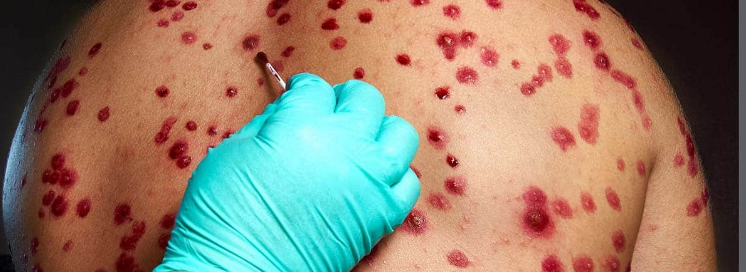

Monkeypox is an emerging viral disease that has gained global attention in recent years because of its potential to spread outside the endemic regions of Africa. This disease is caused by monkeypox virus, a member of the genus Orthopoxvirus, which is related to human smallpox virus, although it usually causes milder symptoms.
The current situation remains concerning, especially in Africa, where most cases are concentrated. By August 2024, nearly 19,000 cases and 541 deaths had been reported across 12 African countries, with the Democratic Republic of the Congo (DRC) being the epicenter. Compared to 2023, infections in Africa have surged by 104%, and deaths by 11%. In Europe, cases have also risen, though on a smaller scale, with 100 new cases reported in June 2024.
Clinical Characteristics of Monkeypox
The incubation period of monkeypox virus generally ranges from 6 to 13 days, but may extend up to 21 days. The disease begins with a prodromal phase that includes nonspecific symptoms such as fever, severe headache, muscle aches, fatigue and, in some cases, swollen lymph nodes (lymphadenopathy). The latter is a distinctive feature of monkeypox that is not seen in smallpox.
After the prodromal phase, a characteristic skin rash appears, usually starting on the face and then spreading to other parts of the body, including the palms of the hands and soles of the feet. The lesions evolve from macules to papules, vesicles, pustules and finally crusts that flake off after a few weeks. The number of lesions can vary significantly between individuals, and in some cases, the rash can be extensive and painful. Although monkeypox is usually self-limiting, lasting 2 to 4 weeks, in some cases it may be complicated by secondary infections, bronchopneumonia, sepsis, or encephalitis, especially in immunocompromised persons or young children.
Prevention Measures for Travelers
Since monkeypox is transmitted mainly by direct contact with body fluids, skin or mucosal lesions of infected persons, and by contact with contaminated objects, prevention is essential, especially for travelers. Below are some key preventive measures:
1. Avoid Close Contact.
It is crucial to avoid direct contact with people showing symptoms of monkeypox, especially if they have visible rashes or lesions. It is also recommended to avoid contact with objects that have been in contact with an infected person, such as bedding, towels or utensils.
2. Animal Precautions
Monkeypox is a zoonotic disease, which means that it can also be transmitted from animals to humans. Therefore, it is important to avoid contact with wild animals, especially in areas where the virus is endemic. This includes avoiding touching live or dead animals and refraining from consuming game meat that has not been properly cooked.
3. Hand Hygiene
Maintaining good hand hygiene is one of the most effective ways to prevent the transmission of infectious diseases. Travelers should wash their hands frequently with soap and water or use alcohol-based hand sanitizers, especially after contact with sick people or animals.
4. Use of Personal Protective Equipment (PPE)
In high-risk situations, such as in areas with known outbreaks, the use of masks and gloves is recommended to avoid direct contact with the virus.
5. Vaccination
Although there is no specific vaccine for monkeypox, the human smallpox vaccine has been shown to be effective in preventing monkeypox. In some countries, vaccination of people at high risk, such as health care workers and those traveling to endemic areas, is being considered.
In conclusion, Monkeypox is a disease that, although generally mild, can have serious complications. Travelers should be informed about the risks and take the necessary preventive measures to protect themselves and others. Avoiding close contact with infected people or animals, maintaining good hygiene, and considering vaccination are key steps to reduce the risk of infection. Personal vigilance and prompt medical attention in case of symptoms are essential to control the spread of this disease.
Bibliography:
About the authors

Medical Team at MCI
Our medical team is composed of highly qualified and dedicated professionals who strive to provide the best possible care to our clients. With extensive experience in various areas of medicine, our team collaborates closely to implement innovative practices and continuously improve patient outcomes.
Among our team are professionals with diverse backgrounds in emergency medicine, primary care, telemedicine, and intensive care. They have contributed to significant clinical research and managed patients with complex medical needs. Additionally, they are actively engaged in continuous learning and professional development, ensuring they stay at the forefront of medical advancements.
We are proud to have a team that participates actively in the medical community, sharing their knowledge and learning from other experts in the field. Their commitment to excellence and patient care is the cornerstone of our services.

